When "Yellow flowers on the green grass" were released in 2015, one of the things that people remembered most is the impressive background. Now, close your eyes and mention the name of this film, we will recall all image of the huge Om field with the cactus on the edge of the rock, and next to Om field is a deep blue ocean. For the first time, thanks to "Yellow flowers on the green grass”, it is known that there is a beautiful Phu Yen with the sea, mountains and green hills. After the hit movie, Phu Yen became a popular tourist destination and began to enter the list of many young visitors.
Therefore, it's not an exaggeration that "If you want to see how beautiful Vietnam is, you must travel to Phu Yen at least once. And you will definitely enjoy a beautiful, pristine paradise with sea and mountains, with rocky stretches and breathtaking views.
This is because of many wild and unprofessional tourism, meaning that Phu Yen is still a mystery with the majority. People just know to travel to Phu Yen, but no one knows what to do and where to go. This article will probably help the visitors to answer that part. The article is not really complete yet, but I believe the visitors will be provided with background knowledge about memorable and magnificent things of this beautiful land before the actual arrival.
The road from Tuy Hoa city to the south (go to Hon Nua, Vung Ro, etc) is a coastal road Phu Yen - very beautiful! Hon Nua, which can be seen from Deo Ca, is 40 kilometers from Tuy Hoa City. You must spend 20 minutes getting there. There is also Lighthouse, so you can visit and view the sea overlooking immense surroundings. Hon Nua is very beautiful, the sea around in the wrist. However, Hon Nua is extremely primitive, and there aren't any tourist service. As a result, if you intend to camp overnight, you must prepare food and drink.
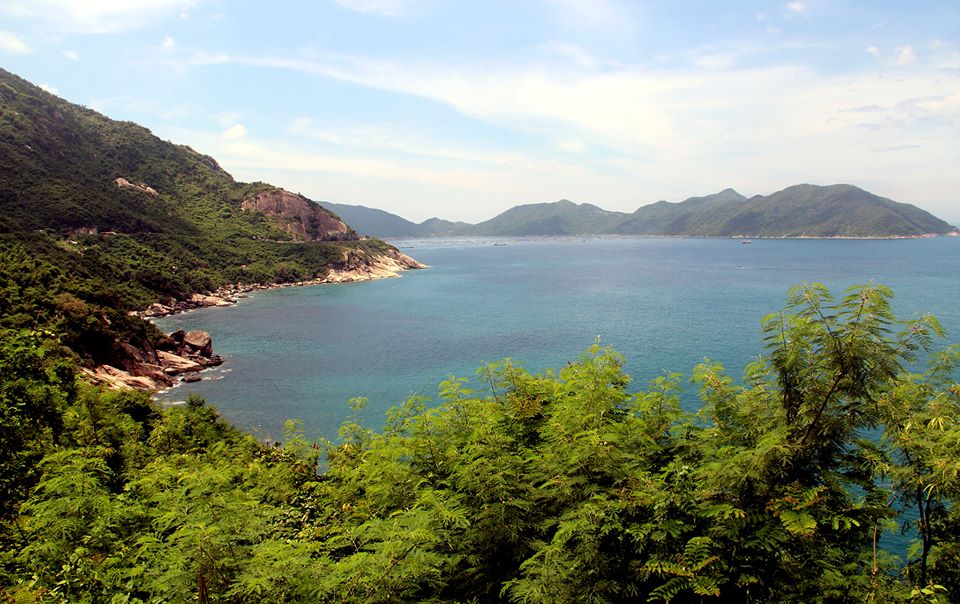
The next destination I would recommend is Vung Ro Scenic Area. This is a very peaceful bay, close to the edge of the Deo Ca mountain range. Just take a moment to run the car, so you will be ecstatic by the picturesque scenery of the bay.
Travelers are advised to come to Phu Yen by plane. Tuy Hoa Airport, located in Phu Thanh Ward, Tuy Hoa City, Phu Yen Province, is 06 km south from the center of Tuy Hoa City. About 35 kilometers south-east from Tuy Hoa City, Bai Mon - Mui Dai Lanh Beach possesses a beautiful coastline with clear water, clear blue water, and white sand. If you can, you can stay one more night, so early morning the next run-up to the Lighthouse to see the dawn soonest at the East End.
Because of the long coastline, Phu Yen coastal road is one of the most beautiful roads in Vietnam. The road is wide, one side is the deep blue sea mixed with the vast sky. Surely, roaming on this road will be one of the nicest experiences you've ever had!
Of course, when coming to Phu Yen, you have to spend a few hours visiting Bai Xep, and look at the beautiful scenery in "Yellow flowers on the grass". Located in the North of Tuy Hoa City, Bai Xep owns a vast expanse of rocky and unspoiled cacti and rocky cliffs overlooking the deep sea below. You can see, all that on the film only to portray a tenth of the beauty and immensity of this place.
Near Bai Xep is Hon Yen island. When the tide ebb away in the afternoon, you can walk from the mainland to the island. This will certainly be a great place to take thousands of photos. You not only can lean on the grass but also have a look at Bai Xep or the distant islands between the vast blue sea.
You should also spend time visiting Bai Om. Bai Om, 72 km from the city, owns a long beach with coconut trees, clean white sand, and crystal clear sea, not to mention the unspoiled and deserted background. Then, take a moment to visit Diem Stone - the place "must come", "must take pictures" once visited Phu Yen. Standing by, you can take a moment to pass over Mang Lang Church, take some pictures and see this beautiful architecture.
 |
| Phu Yen |
This is because of many wild and unprofessional tourism, meaning that Phu Yen is still a mystery with the majority. People just know to travel to Phu Yen, but no one knows what to do and where to go. This article will probably help the visitors to answer that part. The article is not really complete yet, but I believe the visitors will be provided with background knowledge about memorable and magnificent things of this beautiful land before the actual arrival.
The road from Tuy Hoa city to the south (go to Hon Nua, Vung Ro, etc) is a coastal road Phu Yen - very beautiful! Hon Nua, which can be seen from Deo Ca, is 40 kilometers from Tuy Hoa City. You must spend 20 minutes getting there. There is also Lighthouse, so you can visit and view the sea overlooking immense surroundings. Hon Nua is very beautiful, the sea around in the wrist. However, Hon Nua is extremely primitive, and there aren't any tourist service. As a result, if you intend to camp overnight, you must prepare food and drink.
The next destination I would recommend is Vung Ro Scenic Area. This is a very peaceful bay, close to the edge of the Deo Ca mountain range. Just take a moment to run the car, so you will be ecstatic by the picturesque scenery of the bay.
 |
| Vung Ro Scenic Area |
Because of the long coastline, Phu Yen coastal road is one of the most beautiful roads in Vietnam. The road is wide, one side is the deep blue sea mixed with the vast sky. Surely, roaming on this road will be one of the nicest experiences you've ever had!
Of course, when coming to Phu Yen, you have to spend a few hours visiting Bai Xep, and look at the beautiful scenery in "Yellow flowers on the grass". Located in the North of Tuy Hoa City, Bai Xep owns a vast expanse of rocky and unspoiled cacti and rocky cliffs overlooking the deep sea below. You can see, all that on the film only to portray a tenth of the beauty and immensity of this place.
 |
| Bai Xep |
You should also spend time visiting Bai Om. Bai Om, 72 km from the city, owns a long beach with coconut trees, clean white sand, and crystal clear sea, not to mention the unspoiled and deserted background. Then, take a moment to visit Diem Stone - the place "must come", "must take pictures" once visited Phu Yen. Standing by, you can take a moment to pass over Mang Lang Church, take some pictures and see this beautiful architecture.